You have likely hit the plateau where your hours spent live are yielding diminishing returns. You are putting everything into a single ecosystem, hoping the algorithm rewards your consistency, but your audience growth feels stagnant. The siren song of multistreaming—broadcasting to two or three platforms simultaneously—is tempting. It promises to double your reach, mitigate the risk of platform volatility, and force you to be more present across the internet. But before you route your stream output to three different RTMP ingest points, you need to understand that multistreaming is not a "set it and forget it" growth hack. It is a production burden that requires a fundamental change in how you manage your community and your hardware.
The Infrastructure Tax
The first hurdle is local hardware. If you are using a single PC to play a demanding game, encode your video, and manage stream overlays, adding a second or third destination is not just about changing a setting in your software. It is about local upload bandwidth and CPU/GPU overhead. Even if you use a cloud-based restreaming service to handle the heavy lifting, your outbound stream must be robust enough to reach that service without dropping packets. If your internet connection jitters, you are not just lagging on one platform; you are polluting the stream across all of them.
Beyond the technical, there is the "Context Collapse" problem. When you stream to multiple destinations, you are effectively hosting multiple parties in different rooms simultaneously. If you try to read chat messages from all sources at once, you will inevitably favor one platform, leaving the others feeling ignored. Successful multistreamers often designate one platform as the "Primary" for interaction while treating the others as "Secondary" discovery hubs. This forces you to make a choice: do you prioritize the chat that builds your core community, or do you prioritize the platform that gives you the best discovery algorithm?
A Practical Scenario: The Discovery Funnel
Consider a creator named Alex who focuses on technical tutorials. Alex decides to stream on a primary, community-focused platform while simultaneously pushing a feed to a secondary, discovery-oriented platform.
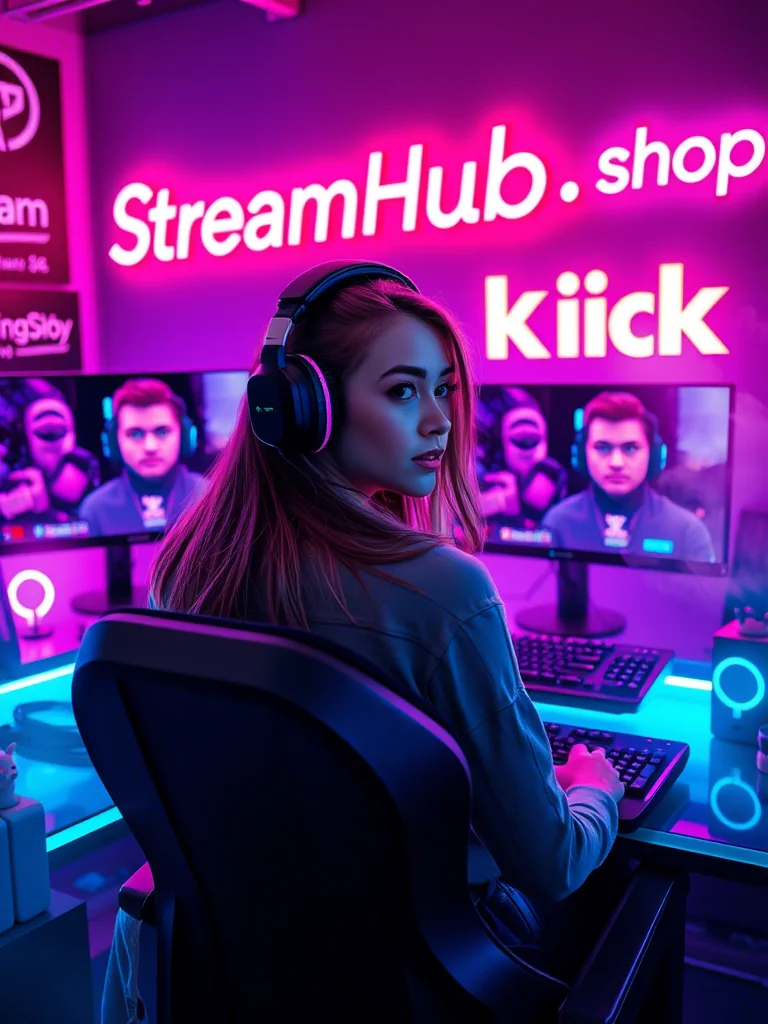
In practice, Alex keeps a dedicated monitor displaying the primary chat, where they respond to questions in real-time. The secondary stream is treated as an "evergreen" feed. Alex includes a recurring overlay element on the secondary stream that says: "I’m answering questions live on [Primary Platform]—join us there for direct interaction." By doing this, Alex isn't trying to manage two identical communities; they are using the secondary platform as an acquisition funnel to drive high-intent viewers to their main hub. This prevents the "split attention" fatigue that ruins many creators' on-camera energy.
The Community Pulse: Recurring Patterns
When observing creator discussions around the challenges of multi-platform broadcasting, a few consistent patterns emerge. Most creators express frustration not with the technical setup, but with the lack of unified analytics. Trying to reconcile viewer counts, engagement rates, and follower growth across different platforms creates a massive data headache. Another common concern is the "personality mismatch"—creators often find that the vibe of their audience differs wildly between platforms. What plays well on a platform designed for short-form, high-intensity content often falls flat on a platform known for long-form, deep-dive discussions. Many creators report that they eventually stop multistreaming because they feel like they are "performing" rather than "connecting," leading to faster burnout than if they had stayed on a single, focused platform.
Decision Framework: Is It Time?
Before you commit to a multi-platform workflow, run your situation through this check:
- Production Capability: Does your current hardware handle an increase in bitrate or cloud-routing latency without dropping frames?
- Interaction Strategy: Do you have a plan to handle disparate chats without looking distracted or disengaged?
- Platform Alignment: Does the audience on your target secondary platform actually align with your primary content format?
- Maintenance Budget: Are you prepared to spend extra time each week checking VODs and metadata formatting for each platform?
If you lack a clear strategy for the secondary platform—specifically how to convert that traffic—you are likely just creating more work for yourself with very little marginal gain in genuine community growth.
Maintenance and Evolution
If you do decide to proceed, understand that the digital landscape is not static. Platform APIs, bitrate limits, and audience demographics shift every few months. You should audit your multi-platform setup every 90 days. Check your retention metrics on the secondary platform: if the growth there is flat, do not hesitate to cut it. Focus your energy where you see actual engagement rather than just vanity metrics like follower counts. For those looking for tools to streamline the technical side of the transition, streamhub.shop offers resources to help manage your production hardware effectively.
2026-06-16
Frequently Asked Questions
Does multistreaming hurt my chances with the algorithms?
Most algorithms prioritize engagement (time watched, chat activity) over where else you might be broadcasting. As long as your primary platform has high engagement, the fact that you are elsewhere usually matters less than the quality of your output.
Should I use the same stream title and description for all platforms?
Rarely. Each platform has different metadata requirements and audience expectations. Tailoring your title to the specific culture of each platform is usually more effective for discoverability.