After 5 years of streaming and content creation on YouTube Gaming, I have learned one thing above all else: data beats intuition every single time.
This is not a beginner guide. This is for serious streamers who want to understand the science behind growth.
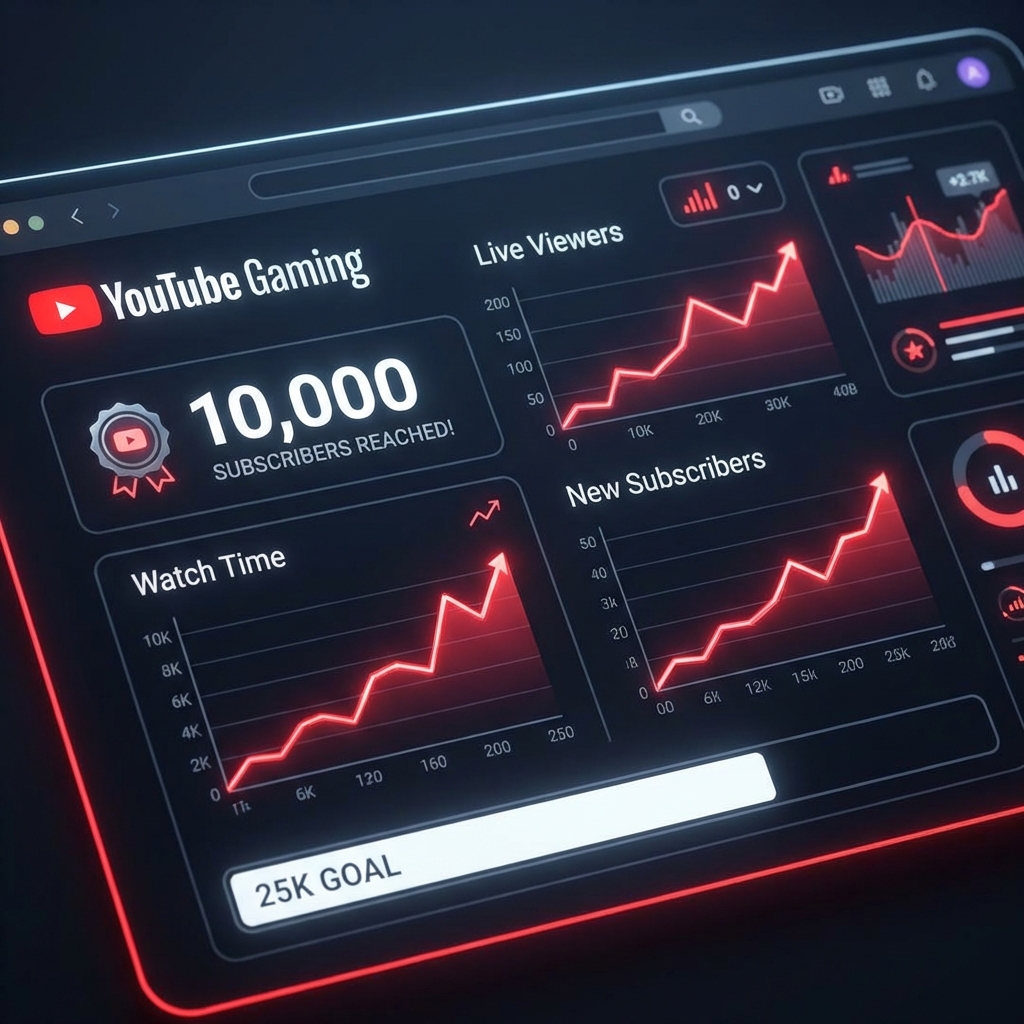
The Metrics That Actually Matter
YouTube provides overwhelming amounts of data. Most streamers look at the wrong metrics. Here is what actually predicts growth:
Tier 1: Critical Metrics
- Average View Duration (AVD) - The most important metric. YouTube promotes content that keeps viewers watching. For live streams, aim for 15+ minutes average.
- Click-Through Rate (CTR) - How often viewers click your thumbnail. 4-6% is average, 8%+ is excellent.
- Impressions to Views Ratio - How efficiently YouTube is showing your content to the right audience.
Tier 2: Important Metrics
- Concurrent Viewers - Your live audience size
- Chat Rate - Messages per minute, indicates engagement
- New vs Returning Viewers - Balance indicates sustainable growth
Tier 3: Vanity Metrics (Less Important)
- Total Views - Means little without context
- Subscriber Count - Does not equal viewership
- Like/Dislike Ratio - Does not significantly affect algorithm
Interpreting Your Data: A Framework
Raw numbers mean nothing without analysis. Use this framework:
Step 1: Establish Baselines
Calculate your averages over the last 30 days:
- Average concurrent viewers
- Average stream duration
- Average AVD
- Average CTR on VODs
Step 2: Identify Outliers
Look for streams that performed significantly above or below average:
- What was different about high performers?
- What caused low performers to underperform?
- Are there patterns in timing, content, or promotion?
Step 3: Form Hypotheses
Based on patterns, create testable hypotheses:
- If I stream at X time, I get more concurrent viewers
- If I play X game, AVD increases
- If I use X thumbnail style, CTR improves
Step 4: A/B Test
Systematically test hypotheses with controlled variables.
The Live Stream Algorithm Deep Dive
YouTube live streaming algorithm differs from regular video. Here is what influences recommendations:
Primary Factors
- Watch Time - Total hours watched across all viewers
- Concurrent Viewers - Higher numbers = more promotion
- Engagement Signals - Chat activity, super chats, memberships
- Stream Consistency - Regular streams build algorithmic trust
Secondary Factors
- Channel authority in specific game categories
- Historical performance in similar streams
- Viewer retention from notifications
- Cross-platform traffic signals
The Concurrent Viewer Problem
Here is the professional truth that analytics-focused streamers understand:
Concurrent viewers create a feedback loop.
More viewers means more algorithm promotion. More promotion means more viewer. The rich get richer.
For smaller channels, this creates a chicken-and-egg problem. Your content might be excellent, but without initial viewers, the algorithm never tests it against larger audiences.
Professional Solutions
Serious streamers use multiple approaches:
- Cross-platform traffic - Drive viewers from TikTok, Twitter, Discord
- Collaboration - Appear on larger channels
- Strategic scheduling - Time streams when competition is lower
- Visibility optimization - Use viewer boosting strategically
Regarding the last point: professional streamers understand that viewer boosting, when done correctly with quality services like streamhub.shop, is a legitimate visibility tool. It is not about faking success; it is about triggering the algorithmic feedback loop that would otherwise never activate.
Advanced Analytics Techniques
Cohort Analysis
Track how different viewer cohorts behave:
- New viewers from browse features
- Returning subscribers
- Traffic from external sources
Each cohort has different retention patterns and value.
Content Funnel Analysis
Map your content funnel:
Short clips (discovery) to VOD highlights (interest) to Live streams (engagement) to Memberships (monetization)
Identify where viewers drop off and optimize those points.
Competitive Benchmarking
Track competitor metrics using tools like Social Blade:
- When do they stream?
- What games perform best for them?
- What is their posting frequency?
Implementing Changes Based on Data
Data without action is useless. Here is my implementation framework:
- Weekly Analysis - Review key metrics every Sunday
- Monthly Deep Dive - Comprehensive analysis first of each month
- Quarterly Strategy - Major direction changes based on trends
Example: Applying This Framework
Situation: AVD dropped 20% over past month
Analysis: Drop coincides with switching to longer streams
Hypothesis: Viewers prefer shorter, more focused content
Test: Run 2-hour focused streams for 2 weeks
Result: AVD recovers, implement permanently
Tools I Use Daily
- YouTube Studio Mobile - Real-time monitoring
- TubeBuddy - Thumbnail A/B testing
- Social Blade - Competitive analysis
- Google Sheets - Custom tracking dashboards
- streamhub.shop - Strategic visibility during key streams
The Professional Mindset
Amateur streamers hope their content gets discovered. Professional streamers engineer discovery through:
- Systematic data analysis
- Continuous optimization
- Strategic use of all available tools
- Long-term thinking over short-term metrics
Conclusion
YouTube Gaming success in 2026 requires treating your channel like a business. That means making decisions based on data, not feelings.
Track the right metrics. Analyze patterns. Test hypotheses. Use every tool available, including professional visibility services when appropriate.
Your analytics dashboard is not just numbers. It is the roadmap to sustainable growth.